Mostrando las entradas con la etiqueta Men. Mostrar todas las entradas

sábado, 12 de marzo de 2011

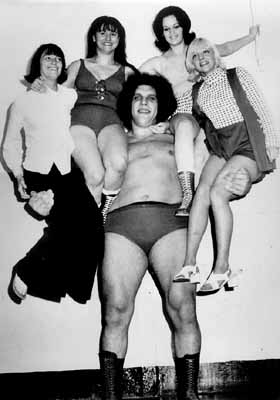
Andre the Giant


the gentle giant


At 7'4" and 500 pounds, Andre the Giant could have been famous for his size alone. His drive, talent and ambition, however, proved to be as big as Andre himself, and the wrestler became legendary for his achievements in and out of the ring. 

His parents named him Andre Rene Rousimoff, but we knew him as The Eighth Wonder of the World.

 Born André René Roussimoff in 1946 at the foot of the French Alps, in a town called Grenoble, André was normal-sized at his birth, but with adolescence came an incredible growth spurt — details are hazy, of course, but various stories put him at 6 feet at the age of 12, 6-foot-7 at the age of 17, and 7-foot-4 by 19. 

He had an affliction called acromegaly, a syndrome wherein the pituitary gland overproduces growth hormone. (There are stories that his grandfather in Bulgaria had the same affliction, and grew to a height of 7-foot-8.) 


Legend has it that when he made the long walk to school as a child, he would sometimes hitch a ride from his neighbor, Samuel Beckett. 

As an adolescent, he worked on the farm, completed an apprenticeship in woodworking, then worked in a factory that manufactured engines for hay balers, but none of these jobs brought him any satisfaction.

At 18 years of age, Roussimoff moved to Paris and was taught the art of professional wrestling by a local promoter who knew there would be good money in André's future. 
Roussimoff trained at night and worked as a mover during the day in order to pay living expenses. Roussimoff was billed as "Géant Ferré", taken from the name of a mythical French giant, and began his career wrestling in Paris and surrounding areas. For the next few years, Roussimoff began making a name for himself wrestling in various countries around the world.
Roussimoff made his Japan debut in 1970, billed as "Monster Roussimoff", wrestling for International Wrestling Enterprise. Wrestling there as both a singles and tag team competitor, he quickly won the company's World Tag Team titles alongside Michael Nador.
The wrestling world quickly realized that Andre was a formidable foe and few could best him, so Andre learnt how to be the heel, making his opponent look good for a number of years. 


For two decades, from the late 1960s through the mid 1980s, Andre the Giant was the highest paid professional wrestler in the business and a household name across the globe. Promoters fought tooth and nail to book Andre, as his presence on a card all but guaranteed a sell-out. 

Fans cheered his every move, and mobbed him on the street. He was known by friends to be cheerful, warm-hearted, and was known by fans as "The Gentle Giant." 


The disease that granted him his immense size eventually began to take its toll on his body. By the late 1980s, André was in constant, near-crippling pain, and his heart struggled to pump blood throughout his massive body.
According to William Goldman, author of The Princess Bride and its respective screenplay, André was having such terrible back pain during the filming of the movie that in the first shooting of a scene where Robin Wright drops about one foot and is caught by André, he fell to one knee and almost dropped her.
In the A&E documentary, BiographyArnold Skaaland mentions how André wished he could see a Broadway play. Arnold offered to buy tickets, but André then passed up the opportunity, citing how he was too big for the seats and that people behind him would not be able to see. This was cited as a principal reason for why André frequented taverns more than anywhere else.

He has been unofficially crowned "The Greatest Drunk on Earth" for once consuming 119 12-ounce beers in 6 hours. In her autobiography, The Fabulous Moolah alleges that André drank 127 beers in a ReadingPennsylvania hotel bar and later passed out in the lobby. Because the staff could not move him, they had to leave him there until he regained consciousness.
After Wrestlemania, Andre retired from wrestling for good. 


His beloved father died in 1993 and Andre returned to Frances to be with his family and attend the funeral. During this visit Andre died in his sleep of heart failure on January 26th, he was 47. According to his wishes his remains were cremated and his ashes were scattered over his ranch in North Carolina.
Andre continues to have a loyal following of fans, for both his wrestling career and his much-loved character in The Princess Bride, Fezzik. RIP Andre!
"I only dog paddle."

sábado, 13 de noviembre de 2010

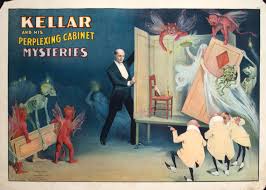
Harry Kellar: The Levitation of Princess Karnac


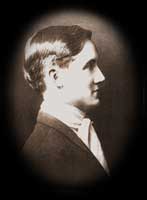
The "Dean of American Magicians," Harry Kellar (July 11, 1849 – March 3, 1922)  was one of the great American Magicians of the turn of the century, whose legacy and influence can be clearly seen today in the acts of contemporary magicians worldwide. He enjoyed a long and brilliant career, thrilling and amazing audiences with his ability to make objects materialize, levitate and disappear.

Harry (Heinrich Keller) was a daring and mischievous child who loved playing chicken with passing trains and experimenting with different chemicals to make explosions during his childhood in Pennsylvania.

As per the wishes of his German immigrant parents, Heinrich became an apprentice to a pharmacist. After accidentally blowing a hole in the floor of the pharmacy following a mixture-gone-wrong, Heinrich hopped a train and ran away to begin life as a vagabond.

Kellar was working on a farm in Buffalo New York, when one evening he went to see a performance of a traveling magician, The Fakir of Ava (the stage name of Isiaiah Harris Hughes), and "immediately got the urge to go on the stage." Kellar's passion for conjuring had been ignited. He answered an ad placed by Hughes for an assistant, and got the job. Kellar attempted his first solo performance at the age of 16. 

In 1869, Kellar took a job with "The Davenport Brothers and Fay," a group of stage spirtualists made up of Ira Erastus Davenport, William Henry Davenport and William Fay. Kellar toured with the company all over Central and South America and enjoyed great financial success.


In 1875, the tour ended in Rio de Janeiro and with an appearance before Emperor Dom Pedro II. Sadly, Kellar's luck was to soon take a turn for the worse, and on his way to a tour in England, the ship Kellar was sailing on, the Boyne, sank in the Bay of Biscay. Lost in the wreckage was Keller's entire fortune, his show, clothes, and jewels. Kellar was left with only the clothes on his back and a diamond ring he was wearing. Even worse, his bankers in New York cabled him telling him that his bank had failed. Desperate for money, Kellar sold his ring, while Fay left to rejoin the Davenports.

Kellar spent the very last of his money to buy an illusion he had seen performed by magicians Maskelyne and Cooke at their theatre the Egyptian Hall. Upon his return to the United States, Kellar started a troupe of his own, and a theatre based on Maskelyne and Cook's, also called Egyptian Hall.

In 1878, Kellar returned to England and spent a fortune of more of Maskelyne and Cook illusions and tricks and the appropriate equipment. Shortly before arriving, Kellar was told of the death of magician Robert Heller.  Kellar was soon embroiled in controversy with the American public after being accused by the New York Sun of pirating the name in order to profit from it. Kellar tried to prove that his name has always been Keller and that he even changed it so as not to be confused with Heller.

He also pointed out that Heller had changed his name from William Henry Palmer. The damage was done however and his sullied public image caused Kellar to eventually cancel his upcoming shows in the United States and head back to Brazil.

During another World Tour in 1882, Kellar met an avid and beautiful young fan named Eva in Melbourne, who came backstage to get his autograph. They became penpals and  wrote to eachother for the next five years.

Kellar returned to his Egyptian Hall in December 1884, on Chestnut Street in Philadelphia, Pennsylvania and enjoyed 264 popular performances. During this time Eva came to visit Kellar and began to play the Cornet in his show. She began to learn the business of Magic alongside Kellar, and they were married on  November 1st, 1887. Eva went on to become Kellar's assistant, appearing in many of his famous illusions including the "Levitation of Princess Karnac."

 On October 1891 Kellar opened his second Egyptian Hall at Concert Hall, located also on Chestnut Street. After a highly successful seven month run, Kellar decided to return to the road.

Kellar retired on May 16, 1908 with his last show at Fords Theater in Baltimore. He handed over the mantle of America's Greatest Magician to Howard Thurston

On November 11, 1917, Harry Houdini arranged for Kellar to perform once more for a show benefitting families of the men who died when the troop transport vessel Antilles was sunk by a German U-boat. Never one for understatement, Houdini arranged for Kellar to be carried off stage in triumph as six thousand spectators sang Auld Lang Syne. This would end up being Harry Kellar's final public performance. 

Kellar died on March 10, 1922. He is buried at Angelus Rosedale Cemetery in Los Angeles. His grave marker reads"Beloved Dean of Magic."

Harry Kellar
Kellar’s “Levitation of Princess Karnac” 

In this illusion, Kellar hypnotizes a woman dressed in a Hindu costume, and she reclines on a couch. As Kellar waves his arm she rises, until she is six feet up. The couch is removed and a ring is passed around her body to prove that there are no wires. 

Another version built by Kellar was purchased by Harry Blackstone Sr who used the trick for many years. The Trick was described as a marvel of the twentieth century and the "crowning achievement of Mr. Kellar's long and brilliant career."

“The Nested Boxes”

Kellar borrows six finger rings from members of audience. He loads them into the barrel of a pistol, aims and fires the pistol at a chest that is hanging on the side of the stage. The chest is opened and inside is another, smaller chest. Inside that, are six boxes nested in each other. 

As each is opened, they are stacked on top of each other and inside the smallest one are the five rings each tied with ribbon to flowers. The five rings are returned to their owners. The owner of the sixth ring wonders what happened to hers, with Kellar pretending not to notice. 

He continues with his next trick, which a variation of Robert-Houdin’s “Inexhaustible Bottle”. Audience members call out different beverages like wine, whiskey, lemonade, or just water. 

Each one is poured from the same bottle and the audience acknowledges that they are indeed receiving their requested drinks. Once bottle is empty, Kellar takes it and breaks it open. Inside is a guinea pig with a sash around its neck which has the sixth ring attached to it. The ring is eventually handed back to its owner.
A variation of the trick was performed in front of United States President Theodore Roosevelt and his children, Ethel, Archie, Quentin and Kermit. Ethel was the owner of the sixth ring and after Kellar had returned her ring, he asked if she would also like to have the guinea pig as a pet. Then Kellar wrapped the guinea pig in paper and handed it back to Ethel. When it was opened, inside was a bouquet of pink roses.

“The Vanishing Lamp”

A lamp is seen set on top of a glass table. Still lit, Kellar covers the lamp with a thin cloth. Kellar told the audience that each evening, the lamp would be returned to its purported, original owner in India at a specific time. 

As a bell sounded out the current time of day, Kellar loaded a pistol and aimed it towards the lamp. At the last chime, Kellar fired the pistol. The lamp seemed to melt away, with the cloth falling to the stage. Kellar was known to have a short temper and after an incident where the “Vanishing Lamp” failed to vanish, an assistant had set it up on the stage to try and repair it. Kellar saw the lamp and decided to take an ax to it. 

Kellar eventually built another one that would continually work and, long after his retirement, the lamp he built still worked perfectly.

 Source: McManus and Young Collection at the U.S. Library of Congress.


sábado, 6 de noviembre de 2010

The Story of Edward Mordrake, fact or fiction?


"The true tale of Edward Mordake (Mordrake) has been lost to history. His unusual case occurred early in medical history and is referenced only in tales handed down. Indeed, the tale of his life has become so muddled through the passage of time that no solid date of birth or death is evident to modern researchers.
The story always begins the same way. Edward is said be have been heir to one of the noblest families in England. He was considered a bright and charming man – a scholar, a musician and a young man in possession of profound grace. He was said to be quite handsome when viewed from the front – yet, on the back of his head there was a second face, twisted and evil.

In some versions of the story, the second face of Edward is a beautiful girl. This is an impossibility as all parasitic twins are of the same sex. Often it was said that it possessed its own intelligence and was quite malignant in its intentions. It has been said that the eyes would follow spectators and its lips would ‘gibber’ relentlessly and silently. According to legend it would smile and sneer as Edward wept over his condition. While no voice was ever audible, Edward swore that often he would be kept awake by the hateful whispers of his ‘evil twin’. 

The story has always concluded with young Edward committing suicide at the age of twenty-three. The method of his death also differs, sometimes poison does him in and in other versions a bullet ‘between the eyes of his devil-twin’ puts him out of his misery. In both versions Edward leaves behind a letter requesting that the ‘demon face’ be destroyed before his burial, ‘lest it continues its dreadful whisperings in my grave.’
Is the story of Edward true?  

The 1896 text Anomolies and Curiosities of Medicine mentions a version of the story and Edward has been featured in many texts, plays and even music as the Tom Waits song ‘Poor Edward’ is based on the story. However, the tale was considered false for quite some time. It was simply too fantastic to believe and, obviously, many parts of the story simply do not make medical sense – years of retelling warped what was likely a very real occurrence.

How can one make the assumption that there is fact beneath this tale?

Chang Tzu Ping was discovered in China in the late 70’s or early 80’s. In his 40’s, Chang had been born with a second face consisting of a mouth, a malformed tongue, several teeth, a patch of scalp, and the vestige of other facial constructs. The throat and the lips of the second face could not move independently, but the mouth did reacted in tandem to Chang opening his. 

Shortly after being discovered he was brought to the United States to have the second face surgically removed. The entire case was documented – including the surgery – on the 80’s television program ‘That’s Incredible’ - and yet there exists almost no secondary evidence of his existence. The operation was considered successful and Chang likely went home to his village to live the remainder of his life without his ‘devil face’.

It does not require a great leap of faith to conclude that the tale of Edward is based on some nugget of fact, perhaps he had something similar Chang’s condition – mutated by storytellers over time. Consider that the case of Chang Tzu Ping is relatively unknown despite only occurring a few decades ago or the strange tale of The Boy of Bengal. These are indeed very rare cases and the human mind has a tendency to classify the unusual as impossible – it often helps us sleep well at night.

image: Janus twin drawing based on Edward -Unknown Artist.
2. Still of Chang from ‘That’s Incredible’, 1982."

miércoles, 8 de septiembre de 2010

Alexander, The Man Who Knows


Between 1915 and 1924, Alexander, billed as The Man Who Knows, astounded theater audiences, performing feats of mind-reading and psychic prediction that defied explanation. Cloaked in exotic robes from the Orient, wearing a jeweled turban and holding his trademark gazing globe, Alexander dominated the stage for nearly a decade before retiring in 1924, at the age of 43, the richest man in vaudeville.

A skilled stage magician, Claude Alexander Conlin thrilled audiences in his famous physic act during which he would answer questions from the audience that were delivered to the stage in sealed envelopes.
At the height of his career, he sold out theaters across the United States and Canada for weeks at a time, making millions from box office receipts, and from the sale of books, crystal balls, and related merchandise.

He traveled the world, and counted among his friends such show-business luminaries as Alexander Pantages, John Considine, Rudolph Valentine, and Clara Bow.

The magician waged open war with anyone who dared try to debunk him, including the Great Houdini, among others. He would quickly decode and then expose the secrets and elaborate techniques used by his rivals to fool audiences.

He even provided blueprints for the manufacture of psychic act stage props, and revealed the famous "Zancig Code" pioneered by the mentalists Julius and Agnes Zancig.

Alexander was the highest-paid mentalist in the world during his time, whose personal life was kept quiet until recently when a surviving granddaughter inherited a scrapbook of memoirs from her grandfather Alexander.  
Surviving members of Alexander's family interviewed by David Charvet say that Alexander had "seven marriages (sometimes to more than one woman at once), spent time in local jails and federal prison, went on trial for attempting to extort an oilman millionaire, made a failed attempt to out run the authorities in a high powered speed-boat loaded with bootlegged liquor, and admitted killing four men."

Other sources say Alexander had a total of eleven marriages throughout his lifetime, some of which were to married women. Many say he also dabbled in bootlegging, some say opium, and possibly the white slave trade.

Alexander has been described by many accounts as a fraud and a con-man. And granted, Alexander made an absolute fortune off his supposed ability as a Seer. But the question of whether he totally discounted paranormal phenomena and spiritualism is somewhat unclear.

He published a book called  The Life And Mysteries Of The Celebrated Dr. Q in 1921, about the magic trade, exposing tricks and secrets. However he also put out a lot of genuine material on spiritualism and the New Thought Movement such as his The Inner Secrets of Psychology, and Personal Lessons, Codes, and Instructions for Members of the Crystal Silence League that suggest he found elements of truth in the subject matter.  

Upon retiring Alexander passed the turban and sold his entire act, image and publicity to mentalist Robert Nelson, who went on to perform under his name for some time after.

It would seem that the private life of Alexander was just as bizarre and surprising as his life on the stage; the secrets of his technique have never been fully revealed, but his fame or infamy can be attributed to his remarkable showmanship, and his ability to allow people to believe the unbelievable.


Information and images from:
The Man Who Knows by David Charvet, 2007

http://www.mrmagician.co.uk
www.generalrubric.com/magicposters

The Life And Mysteries Of The Celebrated Dr. Q (also known as The Dr. Q. Book) (1921, Alexander Publishing Co., Los Angeles, California; later reprinted by Robert Nelson, Columbus, Ohio)


The Inner Secrets of Psychology Vol. 1, 1924. (and an unknown number of further volumes)
Personal Lessons, Codes, and Instructions for Members of the Crystal Silence League, C. Alexander Publishing Co. n.d. (c. 1925 - 1930)

domingo, 5 de septiembre de 2010

Explorations with Space by Cole Rise


See more by Cole Rise

miércoles, 25 de agosto de 2010

Ruysch's anatomical curiosities


It is not that often you come across a truly bizarre man whose work accurately reflects what is going on on the inside.Weeping baby skeletons, elaborate trees constructed of human organs, injected with colourful substances, puppets constructed from human tissue being manipulated by a dead foetus, this is the mind of Frederik Ruysch.  

Human beings have been fascinated by the oddities of the natural world for thousands of years. Ancient Greek tales tell of one-eyed Gods; biblical characters appear in the form of giants and magicians. Objects which produce a sense of wonderment for their rarity, or for their curious unfamiliarity, will probably always be a source of intrigue and inquiry.


The engraving above shows the tableaux (or dramatic scenes) created by the anatomist Frederik Ruysch (1638 - 1731) and included in his wondrous cabinet of curiosities.
Ruysch discovered the recipe for a special coloured substance that, when injected into human organs, revealed the journeys taken by the blood vessels through the lymphatic system. 

He later included these injected body parts in his museum of curiosities: body part specimens in glass jars, baby skeletons, and preserved organs sat alongside exotic birds, butterflies and plants.

He thought of these exhibits as highly educational, but also felt that they should be decorated 'prettily and naturally'. So his daughter would prepare delicate cuffs or collars to be slipped on to severed arms or placed around necks. 


Ruysch turned other pieces in his collection into theatrical scenes. Small skeletons were positioned in 'geological' landscapes, crying into handkerchiefs, wearing strings of pearls, or playing the violin. The 'botanical' landscapes were also made up of body parts: kidney stones or tissue from the lungs would become bushes, grass or rocks.

The scenes were intended to work like plays or stories, representing particular themes or ideas - the idea that our life on earth is short for example, or that our love for the material things of this world is irrelevant given the enormous complexity of the universe. Clearly, Ruysch was as much an expert showman as he was a scientist.


Ruysch performing a dissection
His public dissections would be held by candlelight and accompanied by music and refreshments. And his curiosities, held open to public viewing in a number of Amsterdam houses, were known as the 8th wonder of the world.

In these instances the body has become a metaphor (or symbol) with which to tell a story and encapsulate a particular idea. It is a lifeless object to be put in a case like a jewel. Dead things are re-animated to become part of a fantastical cabaret. While we might now see these exhibits as macabre forms of entertainment, perhaps it is important to reflect on the different ways that other cultures and eras have looked at death.

From the late 1600s, thanks to advances in preservation techniques, there was a fashion for collecting and exhibiting body part specimens. The specimens were either submerged in alcohol, or injected with resins or wax and then dried. In either case, the body parts seemed chillingly lifelike – the dead seemed to be reanimated, and viewers were captivated.


There was a widespread craze for cabinets of curiosity during this period. These small exhibitions were displayed in the houses of wealthy collectors and would include strange, beautiful and outlandish objects.

Exotic shells and jewels, stuffed animals, preserved bodies, clockwork and scientific instruments would often be accompanied by the stuff of fairytales - mermaids, dragons, or the clothes or footsteps of giants. 

Collections frequently included examples of rare and misunderstood deformities. Among the curiosities of the Russian emperor Peter the Great was a two-headed sheep, a four-legged rooster, the teeth of a singer and a tablecloth maker (which Peter himself had extracted), and the bones of a giant footman.

There were also live exhibits: a hermaphrodite (a person with both male and female sexual organs) and a man with only two digits on each of his hands and feet.


Images and information from The British Library

martes, 24 de agosto de 2010

The wonderful Albertus Seba

Hullo my lovelies! I recently purchased this necklace, made by the lovely and talented local artist.  I'd often come across the meticulous illustrations of Albertus Seba, but never before knew anything about the man behind the vast collection.

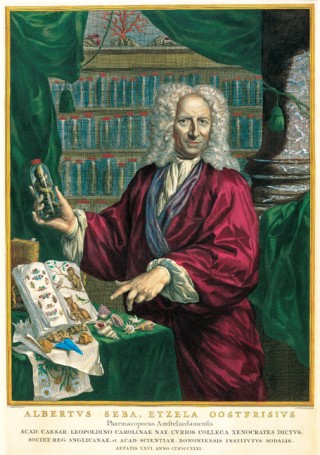
Albertus Seba (1665-1736) was an avid collector of different specimens of the natural world. 

 He traveled all over the world collecting exquisite pieces from the East and West Indies, among these no less than 700 jars containing the rarest exotic animals and many particularly rare snakes.

 He also gathered beautiful and rare conch, the finest and most complete butterflies from the 4 corners of the Earth.

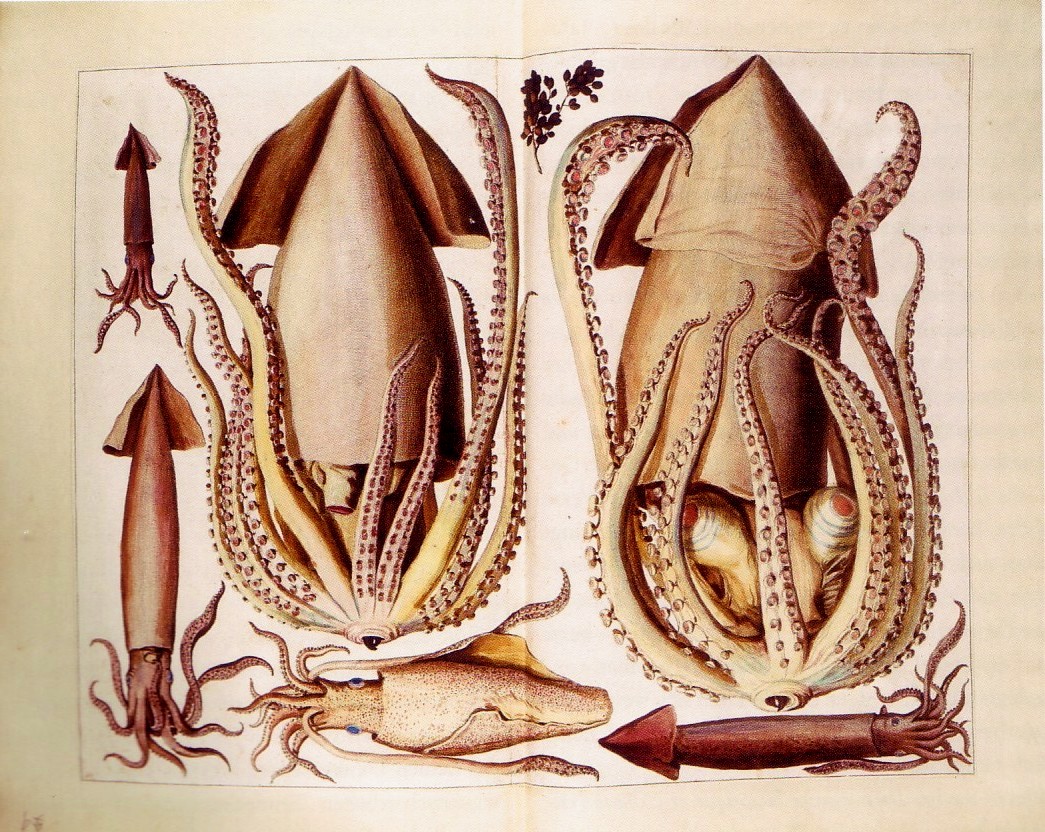
Seba commissioned artists to make meticulous drawings of these diverse objects from his collection.

He went on to publish these drawings, supplemented by commentary, in a four-volumed set entitled Loccupletissimi Rerum Thesauri Accurata Descriptio (abbreviated in the following as Thesaurus).

The large and magnificent work, incorporating an impressive total of 446 copperplates, was published between 1734 and 1765, after his death.

This pictorial record of Seba's unique collection is now available in reprint. For a better appreciation of this major publishing enterprise, it is necessary to take a closer look at the life and historical context of the man behind it.

By becoming an apothecary, Albertus Seba, who was born in 1665 in the East Frisian town of Etzel, chose a profession with close ties to natural history.

Doctors and apothecaries were pioneers of the empirical sciences, which had been growing significantly in importance since the Renaissance. Unlike today, medications were not synthetically made but mixed together from natural constituents.


A whole range of traditional recipes were available to those versed in the art of creating remedies from animal, vegetable and mineral ingredients. But many did not stop there.

They continued the search for new methods, collecting natural specimens from distant lands, studying them, and testing their potential uses. 

Their passion for collecting and researching often extended beyond immediate pharmaceutical applications. In many instances apothecaries started major natural history collections and contributed personally to the growing knowledge of nature. Seba's collection of natural specimens also went far beyond what was required for the normal exercise of his profession.

With his "Die Deutsche Apotheke" (German Apothecary's Shop), as he called his business, Seba rapidly earned an excellent reputation for himself. Even the Russian tsar Peter the Great trusted his pharmaceutical expertise, purchasing medicines from him for many years.

Financially, too, he was successful - something which would enable him to establish his comprehensive collection of natural specimens.

Not relying solely on casual customers who happened to pass by his apothecary, Seba actively sought them out.

He traded in drugs from overseas, advertising his prices in an Amsterdam newspaper. He supplied departing ships with cases of medicines and treated their crews.

Whenever a ship arrived in port, Seba would hasten down to the harbour without delay and administer his medicines to the exhausted sailors. Any natural specimens that they had brought with them he would then be able to purchase at a good price or accept in exchange for his medications.

In 1728 Seba had become a member of the Royal Society.  In 1734 Seba had published a Thesaurus of animal specimens with beautiful engravings.

The full name of the Thesaurus is, with a dual Latin–Dutch title, Locupletissimi rerum naturalium thesauri accurata descriptio — Naaukeurige beschryving van het schatryke kabinet der voornaamste seldzaamheden der natuur (Accurate description of the very rich thesaurus of the principal and rarest natural objects). The last two of the four volumes were published after his death (1759 and 1765).

Today, the original 446-plate volume is on permanent exhibit at the Koninklijke Bibliotheek in The Hague, Netherlands. Recently, a complete example of the Thesaurus sold for US $460,000 at an auction. In 2001, Taschen Books published a reprint of the Thesaurus, with a second printing in 2006.


Image sources: 1 2 3 4 5