Mostrando las entradas con la etiqueta Freaks. Mostrar todas las entradas

jueves, 3 de enero de 2013

Violetta, the Half Woman


Amazing Account Of A Limbless Beauty Show

by Wallace Stort London Life January 27, 1940

"The next stage was the central one of the five that formed the semicircle. I stood out from and was rather more ornate than the others, and obviously its occupant was the star attraction of the show.
The name of it above in brilliant Neon lights was "Violetta," and the lady was no stranger to me, as I had seen her and chatted with her two or three times before. Older readers of "London Life" may remember that I have referred to her more than once in my articles.

Violetta is probably the most outstanding of all the limbless ladies on exhibition, and is, I think, at the moment the only example of her particular type now before, at any rate, the American public. While the lecturers were busy with the other attractions, she remained perfectly calm and detached, neatly poised on her slender-stemmed, heavily brocade-topped pedestal, set in the centre of the stage. Now and then she would glance aloofly at the staring crowds, apparently undisturbed by their curiosity.
I remember her as a rather plain schoolgirl of 17 or 18, just over from Germany with her fair hair worn in a straight, flat fashion that did not add to her attraction. But that was ten or more years ago. Nowadays she has blossomed out into a real beauty, her blonde hair beautifully marcelled, her piquant face attractively made up, still grave and aloof, but undeniably charming.

Violetta possess a perfect figure, firm, beautifully curving bust, small neat waist and slim, rounded hips. But those are the beginning and end of her charms. She is merely a beautiful torso, completely without either arms or legs, even to the rudiments of limbs. Except that the usual limbs are absent, there is no suggestion of deformity about the neat trunk, which would not suffer comparison with that of any beauty queen or national Venus. In fact her usual billing, in her case no exaggeration, is as the "Beautiful Armless and Legless Venus."
According to her medical history, the torso is not only faultlessly modelled, but is without blemish of scar of any kind. Doctors and artists who have examined her have actually stated that, in her case, the absence of limbs constitutes no deformity. The doctors' verdict is that "the formation of the body is perfect within its own limits, and no provision has been made by Nature for the presence or functioning of limbs". And artists have described the wonderful torso as "a perfect, if unfinished, piece of natural sculpture."

When I first saw Violetta on her arrival in the States from Germany, years ago, she was very modestly clad in a costume of unrelieved black velvet, moulded to her figure, certainly, but quite opaque and clothing her from neck to hips. She still remains faithful to that type of costume, but it has subtly altered and has become much more alluring and revealing. The costumes of hers, by the way, can only be described as a specially designed figure-moulding pocket into which the torso is neatly fitted by her maid. The particular one she was wearing at this moment - with, by the way, a profusion of glittering necklaces - was of sheer black silk of a cobwebby fineness and transparency and clinging with the unwrinkled perfection of a skin-tight silk stocking. In fact it was obviously drawn on and smoothed into position exactly like a silk stocking.
I should say that the whole costume, when stripped from her, could easily be crushed into a loose, flimsy ball within one's closed fist. I could certainly be said to cover Violetta's charms from armless shoulders to shapely hips, but every curve and rounded contour of the beautiful torso was as fully revealed, and much more alluringly, as if she had been nude. AS she rested, gracefully poised on the cushioned top of her pedestal, one could easily note the faultless perfection of the limbless body.

At length the lecturer came round to Violetta's stage. She at once became the professional artist, aware of her public, bowing to right and left, with a charming, unaffected smile, as the man orated about her wonderful and unique charms in the usual highly eulogistic manner. He hoped that nobody would be so foolish to be sorry for her, as Violetta would be most hurt and would not regard it as a compliment.

She was perfectly happy and contented. In fact he could let the audience into a little secret and tell them that Violetta did not think a great deal of limbs in general. She did not think them particularly attractive and, for her own part, thought she was better without them. (In which, by the way, though the audience thought it a good joke, there is more than a little truth, and Violetta is not the only one of her kind to have the same strange, but compensating outlook. And on this occasion Violetta, while the audience was laughing, nodded and smiled vigorously, obviously in full agreement with the lecturer).

He suggested that she would make an excellent and economic wife for any enterprising young man, as she could never run away from home, and would save him a fortune in shoes, stockings, gloves, etc. But he did not tell his laughing audience that Violetta, as I knew, had been happily married for some years, and that round her neck, along with the gleaming rows of necklaces, she always wore a thin, gold chain on which hung her engagement and wedding rings, which she could wear in no other way.
After the lecturer's introductory remarks, Violetta presented her act; and a very remarkable act it is, revealing to the astonished spectators who see her for the first time the surprising fact that a totally limbless girl may not necessarily be absolutely helpless.

She is attended to during the performance by a very pretty nurse (who is, in fact, her maid) clad in a stunning uniform of brief, little more than hip-length skirts and silk tights, that no ordinary nurse could possibly wear. The nurse comes forward and first of all places on the floor below Violetta's pedestal (which, by the way, is about two and a half feet high, bringing its occupant up to about normal height) a thick mat of brightcoloured, cushioned rubber, and round it the materials for the act.
She then releases a catch in the top of the pedestal on which Violetta rests, and allows it to tilt forward slightly. Violetta drops to the mat in a graceful, flexible swing, and manages miraculously to remain upright in a perfect balance. After that she looks after herself, though the nurse hovers round solicitously all the time to offer help if necessary.
The extraordinary thing is that she is able to move about the mat quite easily, jumping or hopping - however you would describe the action - rather like a man in a sack race, only much more gracefully and effortlessly, and keeping her balance most of the time. Sometimes, in fun, she rolls right over, head first, she is coming at the end of the roll to an easy upright position again.
Meanwhile, using only her lips and teeth, she places in position a small easel, and upon that a pad of drawing papers. Then, with a charcoal pencil in a long holder, held between her teeth, she sketches in rapid succession, cartoons of well-known people, the nurse tearing off each finished drawing in turn and tossing it into the audience, to be grabbed by eager hands. In the same way, using only her wonderfully flexible lips, teeth and tongue, she opens a cigarette box which stands on a low table, selects a cigarette, and shifts it expertly to the corner of her mouth. Then, with her tongue she pushes open a matchbox - which, of course, is a fixture in a small chromium stand - and picks out in some miraculous manner a match. The cigarette is now between her lips in one corner, and the match between her teeth in another. She strikes the match, brings the end of the cigarette and the lighted end of the match together, lights the cigarette, and blows out and spits out the match. The trick is one that you'd think impossible until you see it, and then it looks almost easy!
She also demonstrates, in pantomime, how she can, if necessary wash herself practically all over. Again she uses her teeth, holding a sponge between them; and by contorting her amazingly flexible limbless torso into every conceivable position, she keeps the sponge moving lightly over her body. At one time she had rolled herself into a compact ball, "showing," as the lecturer humorously remarks, "how easily Violetta manages to make both ends meet!"
You would imagine that the feat of threading a needle and sewing, using only the tongue, teeth and lips, would be an impossible one. But this Violetta demonstrates is also comparatively simple to an ingenious mind. She picks the needle up with her tongue and lips, and sticks it point downward into the wood of her table, using her closed teeth to drive it home. Then she uses her tongue to pick up the thread, and manipulates it easily and swiftly into position with her lips and, bending down, threads the needle expertly. The sewing seems a more difficult business, but the fact is that Violetta's lips have become almost as flexible as fingers, and she seems to find no trouble in the task.
At the end of the remarkable little show she hops easily to the end of her mat and bows and smiles to the tremendous applause Then, turning to the nurser who stoops towards her, she crouches lightly and hops upwards into the nurse's arms. The nurse, with the beautiful limbless body in her arms, now steps down from the stage and carries her mistress among the audience, with which she chats in a smiling, friendly manner. She answers all sorts of questions about herself, even the most impertinent, with a laugh, and allows anybody who wishes to touch and smooth her body, in order to prove to themselves that she is "real and not an illusion."
The only thing she bars is kissing - which, believe it or not, many young men, as well as some women, attempt at nearly everyone of her performances. She has a way of using a shoulder, as she rests in her nurse's arms, that a boxer might, and the unexpected jab to the chin of a too ardent admirer is sometimes calculated to bring tears to his eyes!
Finally, Violetta is borne back to her pedestal, where the nurse settles her comfortably, and she returns to her grave and aloof contemplation of whatever is she thinks about, until the time comes round again for her turn.

martes, 19 de junio de 2012

Melvin Burkhart, The Original Human Blockhead

Born:  Born 1907 Louisville, KY, Died November 8, 2001 Gibsonton, Florida. Biography: From his obit(Associated Press):

TAMPA, Fla. (AP) - Magician Melvin Burkhart, known in the heyday of
carnivals as ``The Human Blockhead'' for his ability to hammer a spike
into his head through a cavity behind his nostril, died Thursday. He
was 94. 

Burkhart could make both sides of his face do different things, and he
could squeeze into enough shapes to be known as ``The Anatomical
Wonder.''

``He was 60 years in the sideshows, and he's the last of them,'' said
friend and magician Bill Dahlquist. ``It's the end of the era, it
really is. It's sad.''

Burkhart recently was in New York to trade stories with friends and to
perform at a wedding. When he returned home, he checked into a
hospital, and shortly afterward suffered a stroke. He had time for
private goodbyes before his heart gave out.
 
``He taught me how to be a rich man,'' said his son, Dennis Burkhart, a
biochemical engineer. ``He said a rich man is someone who can make one
person smile everyday. If I can be half the man my father has been, I
will be a great man.'' 

The elder Burkhart and his wife, Joyce, with whom he had three
children, were to celebrate their 52nd anniversary this month.
``He did what everybody else always talked about doing,'' said
daughter-in-law Jane Burkhart.

``He ran away and joined the circus.'' 


from James Taylor (excerpt of an unpublished essay, "How I Spent My Carny Vacation," 1998):

You've seen the act before, though the horrific elements of it probably had you wondering, "Why in the hell would anybody do that?" more than, "Who came up with that act?" Human Blockhead or just Blockhead, the act's straightforward and frightening: The performer takes a hammer, a bottle, the microphone, whatever, and with a maniacal laugh proceeds to pound a spike as big as your finger right into the middle of his head. Well, that's right up his nose. Maybe you saw the blockhead push an ice pick up his sinuses. Regardless, whether you saw it with those implements or others, when the act's done for comedy, a stand-alone act for the gross-out stand-up, it's origins are traceable to Gibtown. Specifically, to Melvin Burkhart, the Anatomical Wonder. The man Robert "Believe It or Not!" Ripley dubbed the Human Blockhead. The man who took a pretty gruesome piece of fakir performance, made it even more gruesome, and then made it comic. 


Melvin's done the act a million times. Taught it to a million wannabes who've taught it to a million others. Some of them don't even bother to invent their own patter. If he'd had a copyright on that material and the wherewithal to file suit, Melvin would be a millionaire by now, that is, if you could ever collect from other blockheads. As it is, he's just proud to know he's left his mark on the business. And on any given day, he'd just as well be doing magic anyway (yes, he's invented acts there, too). 


On the day Kathleen and I stopped by to see him this year, he told us before we left that we had to watch him do one more card trick. "I think you'll like this one," and he was all self-deprecating in tone, a sure sign from Melvin he's setting you up. True to form, he handed Kathleen the deck, told her to cut the deck anywhere, look at a card, not show it to him, hand it back, let him shuffle, he gave them back... and he never touched them again. And for the next five minutes, Melvin pretty much told her to do whatever she wanted with the deck. Cut them where she wanted. Divide them into a couple piles anywhere she chose. Pick left, right, middle, her choice. And when it was all over, Kathleen having apparently controlled the entire show, Melvin told her to make a final choice between the face-down piles. Any choice at all. She chose. Randomly. Of course she chose her own card, the one she'd picked at the beginning of that little performance. "That," she said, no small amount of awe in her voice, "was really good." "Good?!" Melvin came back, laughing through it, "That was perfect!" And, as always, he was right.

(1998)

Source

sábado, 7 de mayo de 2011

Geek Love

tattooed lady circa 1920
I can't really describe Katherine Dunn’s novel, Geek Love, it is a just farking brilliant book with a quiet, creeping horror that grips you! It's one of those books you just can't tear yourself away from. In the story, the Binewskis, a couple that works in a freak show, deliberately give birth to freaks, so their children will always have jobs. This weird, funny and original piece of work follows the lives of the characters exploring the inner-working of our minds and our notions of the freakish and the normal, the beautiful and the ugly, the holy and the obscene.


 Katherine Dunn  is a natural story-teller who grew up in a migrant blue-collar family in the West. Her prose is frequently pure poetry and every sentence is written with a natural grace and ease. 

She has never had any formal training, but she knew from her childhood that she would one day become a writer. Once successful, she feared her lack of training would come back to haunt her because she believed she lacked the variety and flexibility of most writers. But, she continues to have a fan-base especially for her column on boxing in the local alternative paper in Portland, Oregon, where she now lives and works.Her interest in DNA and genetic manipulation came together in her novel, Geek Love. 

From Publishers Weekly, "This audacious, mesmerizing novel should carry a warning: "Reader Beware." Those entering the world of carnival freaks described by narrator Olympia Binewski, a bald, humpbacked albino dwarf, will find no escape from a story at once engrossing and repellent, funny and terrifying, unreal and true to human nature. Dunn's vivid, energetic prose, her soaring imagination and assured narrative skill fuse to produce an unforgettable tale. The premise is bizarre. Art and Lily, owners of Binewski's Fabulon, a traveling carnival, decide to breed their own freak show by creating genetically altered children through the use of experimental drugs. "What greater gift could you offer your children than an inherent ability to earn a living just by being themselves?" muses Lily. This raw, shocking view of the human condition, a glimpse of the tormented people who live on the fringe, makes readers confront the dark, mad elements in every society."

I highly recommend Geek Love, its an unforgettable read, you can purchase it here 

sábado, 5 de febrero de 2011

Koo-Koo the Bird Girl


"Minnie Woolsey was born in Georgia in 1880 and a wide variety of stories exist in regards to her physical condition. It is generally believed that Minnie was born with Virchow-Seckel syndrome, a condition also known as bird-headed dwarfism. The syndrome is quite rare and is characterized by a small head, stunted growth, beak-like nose, receding jaw as well as some mental limitations.  In addition, the syndrome also left Minnie almost completely bald and blind.  Toothless, odd and sporting glasses as thick as her thumb Minnie spent the majority of her formative years in a Georgia Asylum until, as legend states, she was rescued by a showman who thought her oddball looks we just odd enough to cash in on.

Minnie began her sideshow career dressed in an American Indian costume and billed as ‘Minnie-Ha-Ha’. The name was an obvious play on North Carolina’s Minnihaha Falls and the gimmick was likely a nod to the Aztec Children exhibits of yesteryear.  Minnie, initially reluctant and shy, soon came to love the attention she received as a sideshow attraction.  She was known to dance and shake excitedly and to speak in thrilled gibberish to the delight of audiences everywhere.

In 1932, Minnie landed a role in Freaks as Koo-Koo the Bird Girl and a film legend was born. The image of Minnie, dressed in a feathery costume complete with tiny plumed cap and chicken-like feet, shimmying atop a table during a wedding feast is forever synonymous with the film.  Once you seen Minnie’s performance, you will never forget it. In fact, there was actually another ‘Bird Girl’ in Freaks but few remember poor Betty Green as she was completely overshadowed by Minnie. Today Betty Greene is generally only remembered, in error, as being Koo-Koo from Freaks.

Following her film debut Minnie continued to perform as ‘Koo Koo – The Bird Girl’ and continued to wear her strange little costume for a number of years. Eventually she had stints at Coney Island where she was billed as ‘The Blind Girl from Mars’.  By that time, age or perhaps boredom had taken hold and the dancing had stopped. Minnie’s “Blind Girl’ act consisted primarily of standing or sitting near comatose, deadpanning all audience jeers and interactions.

How long Minnie was involved in human exhibition and how she passed are something of a mystery. Some accounts state that she performed well into her 80’s. There are also reports that Minnie was hit by a car in the 1960’s. Regardless of how her life ended, her peculiar appearance ensured her a small level of immortality."


Minnie with the cast of Freaks

martes, 25 de mayo de 2010

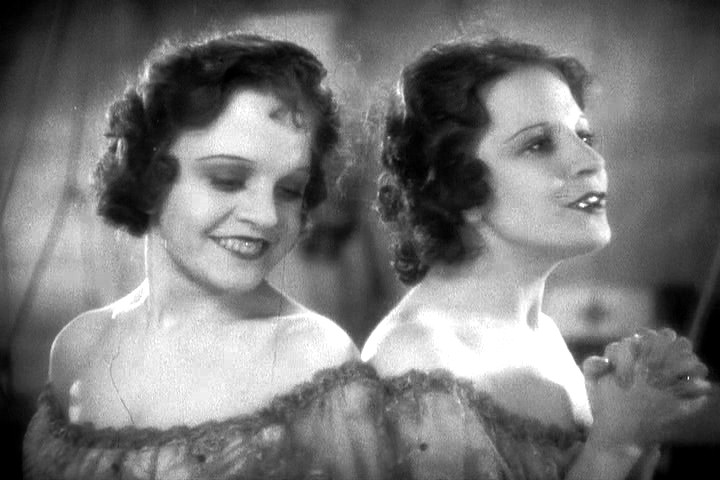
Daisy and Violet Hilton

Original caption: Famous Siamese twins Daisy and Violet Hilton (of Freaks movie and sideshow fame) enjoy warm surf at Miami. (Feb. 25, 1945) Paul Colston Collection.

Contrary to popular belief, outright exploitation was not very common in sideshow. The majority of human marvels displayed themselves for their own reasons and quite often reaped massive financial and personal rewards for doing so. However, of the few performers who were exploited against their will, the tale of Daisy and Violet Hilton ranks as one of the worst.

Daisy and Violet Hilton were born in Brighton, East Sussex, England on February 5, 1908 to a young, unwed barmaid, Their birth name was Skinner however their impoverished and unmarried mother, Kate, could not fathom the responsibilities involved in raising a pair of girls joined. She sold the twins to her boss and midwife Mary Hilton.  

The sisters were pygopagus twins - conjoined at the hips and buttocks. They shared blood circulation and were fused at the pelvis but shared no major organs.  A medical account of the birth and a description of the twins was provided for the British Medical Journal by Dr James Augustus Rooth[1], the physician in charge at the time of their birth. 


He reports that subsequently the Sussex Medico-Chiurgical Society considered separation, but unanimously decided against it as it was believed that the operation would certainly lead to the death of at least one of the twins. He notes that these twins were the first to be born in the United Kingdom conjoined and to survive for more than a few weeks. 

 Soon after acquiring the twins, Mrs. Hilton put them on exhibition. They were managed by Ike Rose of Rose's Royal Midgets fame and exhibited alongside Rosa and Josefa Blazek, probably the first time in history that two sets of Siamese twins were ever shown together. 
Daisy and Violet were later taken on an Australian tour with Mary Hilton, her husband Henry, and their daughter Edith. While in Australia, Edith married Myer Myers, a carnival balloon salesman.

According to many sources, including the autobiography written by the Hilton sisters in 1942, Mary Hilton was a strict, physically abusive, exploitive and corrupt human being. The twins were ‘trained’ and ‘groomed’ to sing and dance in the vaudeville tradition. 

While this training was in progress the horrific abuse and dehumanizing continued. When the girls finally began touring, they were seen as little more than possessions by the Hiltons.
The twins proved to be hugely successful and the toured extensively beginning at the age of three. On stage, the pair likely looked like dolls, their blond hair in curls and bows on their shoes. Violet played the piano while Daisy played the violin.


When Mary Hilton died, she willed the twins to Edith and Myer. The Myers relocated to the United States and used part of the twins' fortune to built a luxurious, Frank Lloyd Wright-inspired home in San Antonio, Texas. 

Daisy and Violet spent the majority of the 1920s touring the United States on vaudeville circuits, playing clarinet and saxophone, and singing and dancing. The sisters were a national sensation, counting among their friends a young Bob Hope and Harry Houdini, who allegedly taught them the trick of mentally separating from one another.


Billed as ‘The United Twins’, their tours of Germany, Australia and the USA often saw record crowds. The twin brought in enormous amounts of money. Mary Hilton kept every penny.

When Mary finally died in Birmingham, Alabama, the guardianship of the twins fell to Mary’s daughter Edith and Edith’s husband, Meyer Meyers. They were even worse than Mary as they controlled every movement the twins made. They also proved to be poor agents as they insisted on keeping the girls ‘dolled up’ as little girl well past the age it was acceptable. Critics took notice and the twins were allowed to grow up, but only a little.


The mistreatment and corruption continued under the dictatorship of Edith. Edith purchased a mansion in San Antonio with the money the twins earned as a headquarters as the twins spent much of the 1920’s touring the United States on vaudeville circuits. It was on these circuits that they met Bob Hope and their dear friend Harry Houdini. Their popularity, at this point was near its peak and as a result they became subject to scandal.

The twins had befriended their advance agent, William Oliver. Oliver’s wife Mildred was suspicious of the relationship and accused William of improper acts. A postcard from the twins signed to William ‘with love’ prompted Mildred to file for divorce and sue the twins for $250,000. Oddly enough, this frivolous lawsuit was the catalyst for the Hilton’s freedom.


                                               age 16

During a visit to San Antonio lawyer, Martin J. Arnold, the truth came out. As the Meyer’s were out of the room the Hilton sisters told the lawyer of their life of abuse and captivity. The lawyer was flabbergasted and immediately took on the twins’ case. He took the twins into protective custody.

In April of 1931 Judge W.W. McCrory awarded a large sum of money – some reports say as much as $100,000, to the sisters and granted the pair their freedom.

The girls had spent 21 years in abject slavery.


Daisy and Violet became citizens of the United States and returned to show business. They hosted their own show, ‘The Hilton Sisters’ Revue’, and stared in the 1932 film Freaks.


Everything seemed to be perfect in the life of the Hilton sisters; however the pair soon began to self destruct. Due to too many years of solitude, suppression and deprivation the girl wallowed in excess. They had numerous affairs, legal problems, clashes with that media and a couple of short publicity marriages. Their popularity nosedived.

Violet had a string of highly publisized love affairs with celebrity boyfrinds, and became engaged in 1933 to bandleader Maurice L. Lambert. Violet and Lambert began a nationwide search for a clerk who would issue them a marriage license. 

Each of her requests - in 21 states - was denied on moral grounds, and lawyers were brought in to argue on Violet's behalf. One New York clerk refused to issue the license because Daisy was not also engaged. Though briefly engaged to Jack Lewis, another bandleader, she deemed him too shy for marriage to a Siamese twin.
Unable to get married, Violet and Maurice split. Two years later, however, the twins' agent Terry Turner announced that he could arrange for Violet to marry after all - she only needed a groom. 

Chosen for the role was Violet's dance partner and a longtime confidant of the twins, James Walker "Jim" Moore. The wedding, such as it was, took place on July 18, 1936, at the Texas Centennial Exposition on the 50-yard line of the Cotton Bowl. Daisy, too, got to experience wedded bliss when she married vaudeville dancer Harold Estep, stage name Buddy Sawyer, at Elmira, New York, on September 17, 1941. Their marriage lasted two weeks.

Original caption: Siamese Twins Daisy and Viola Hilton - Freak Siamese twins are capable of earning living in practical pursuits. These English-born twins have just come from San Antonio, Texas. Photo shows Daisy Hilton typing while her inseparable sister Viola sews. They are both accomplished typists, needlewomen, and are expert in the culinary art. (Photo by Underwood & Underwood, Nov. 29, 1924)

The sisters in the cafeteria of the Newhouse Hotel, Salt Lake City, Utah. They were scheduled to perform at the RKO theater.

After the decline of vaudeville, the twins, like countless others, turned to Hollywood. In 1950 the sisters appeared in the film Chained for Life as Dorothy and Vivian Hamilton, vaudeville singers. In the film, Vivian takes a dislike to the musician who is courting her sister. 

Dorothy, on the other hand, is so smitten that she begs doctors to separate her from her twin so that she might marry. In the end, Vivian shoots and kills Dorothy's beau with a pistol grabbed from a sharpshooter's prop cart. The judge - and the audience - are left to decide whether to send innocent Dorothy to jail, or let guilty Vivian walk free. Chained for Life was a colossal failure, banned in many places due to its lurid subject matter.

Struggling to survive, the twins opened a hotdog stand, The Hilton Sisters' Snack Bar, in Miami, in 1955, but the business failed in part due to the objections of fellow vendors.

The Hiltons’ last public appearance was at a drive-in movie theater in Charlotte, North Carolina in 1962. Their tour manager abandoned them there, as the tour was a failure and he was tired of losing money. 

He left them without any money or transportation and the twins simply decided to settle in Charlotte. A kind grocery store manager hired the sisters to work in his shop, where they checked and bagged groceries.


 On January 6, 1969, after battling the Hong Kong flu for some weeks, the twins failed to report for work. Their boss called the police and the sisters were found dead in their small trailer. Daisy died first and forensic evidence tragically suggested that Violet lived for two to four days afterwards.
Having no surviving family, the twins were laid to rest beside a Vietnam soldier named Troy Thompson, the son of an acquaintance. At death, the twins owned but $1,000, a far cry from their formerly vast fortune. Those who met them late in life describe the quintessential "fallen stars": the twins spoke and dressed as they had in their heyday, well into the 1960s.
Despite the sad end to their lives, the memory of the Hilton sisters still lives on. In 1997, a Broadway musical loosely based on the sisters’ lives, Side Show, with lyrics by Bill Russell and music by Henry Krieger, received four Tony nominations.


Source: 1.2.3.4.5